





Is Now a Good Time for Debt Consolidation Refinance?
Is Now a Good Time for a Debt Consolidation Refinance? What Michigan Homeowners Need to Know
If you are sitting on credit card debt and wondering whether a debt consolidation refinance makes sense right now, you are not alone. Thousands of Michigan homeowners are asking the same question, especially with interest rates fluctuating and economic uncertainty making every financial decision feel heavier than it should.
TL;DR: A debt consolidation refinance can be a smart move if you have significant home equity and high-interest debt, but the timing depends on your specific financial situation, current interest rates, and your ability to commit to a payoff plan. Before making any decisions, run the numbers carefully and consider speaking with a mortgage professional who can evaluate your unique circumstances.
Understanding What a Debt Consolidation Refinance Actually Means
Let me be clear about what we are discussing here. A debt consolidation refinance involves replacing your current mortgage with a new one that has a higher balance. The difference between your old mortgage and the new one gets paid out to you in cash, which you then use to pay off high-interest debts like credit cards, personal loans, or medical bills.
This is different from simply taking out a personal loan to consolidate debt. With a cash-out refinance, you are leveraging your home equity, which typically means you can access lower interest rates than unsecured personal loans offer. However, you are also putting your home on the line as collateral, which is why this decision requires careful consideration.
For homeowners in Michigan who have built up equity over the past several years, this option can look attractive on paper. But looking attractive and being the right choice are two different things.
The Current Interest Rate Environment
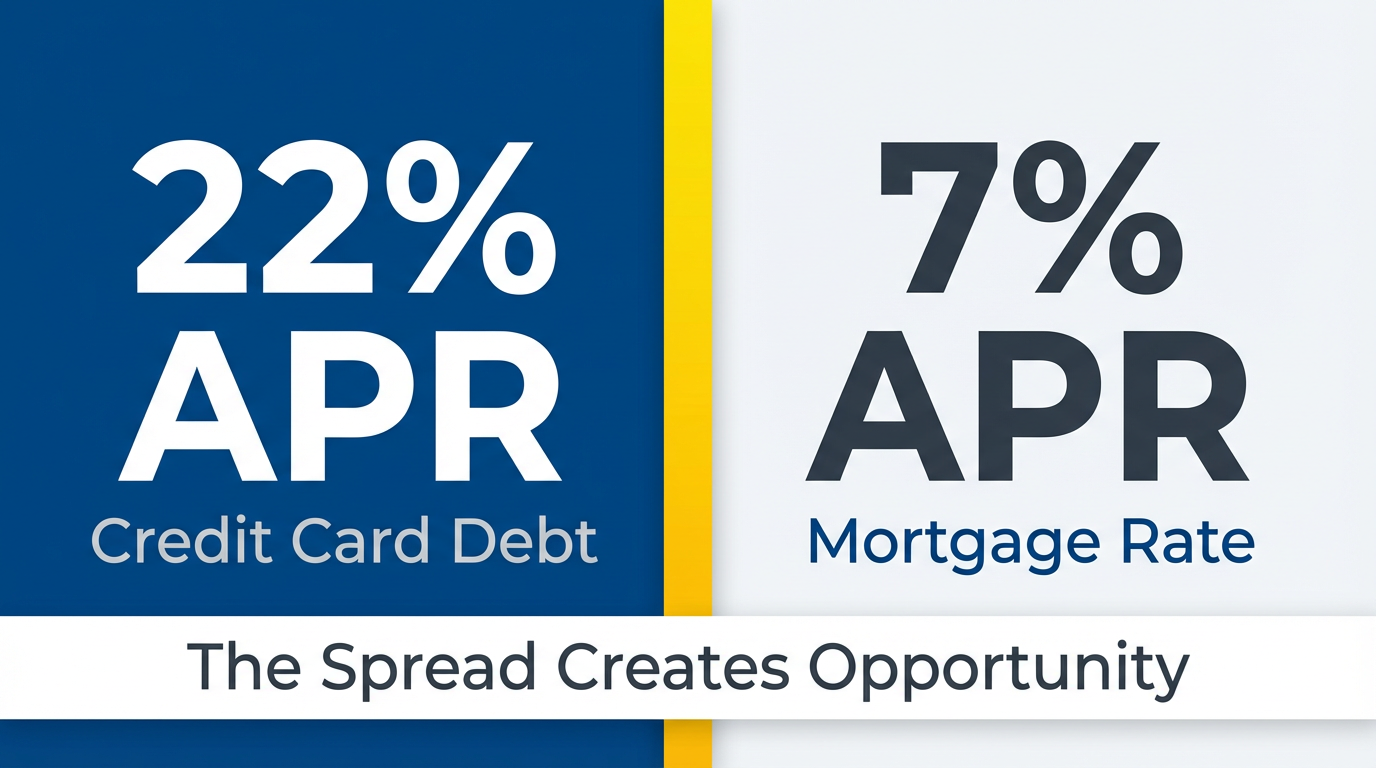
Here is where things get interesting. Credit card interest rates have climbed steadily over the past several years. The average credit card interest rate now hovers well above 20% APR for many cardholders. Meanwhile, mortgage rates, while higher than the historic lows we saw a few years ago, still typically come in significantly lower than credit card rates.
This spread between credit card rates and mortgage rates creates a potential opportunity. If you are paying 22% on credit card debt and could consolidate that into a mortgage at 7%, the math can work in your favor. But the math only tells part of the story.
Two Critical Questions to Ask Before Moving Forward
Question 1: Will You Actually Save Money After All Costs?
This seems obvious, but I see homeowners overlook this step all the time. A debt consolidation refinance comes with closing costs, typically ranging from 2% to 5% of the loan amount. You need to factor these costs into your calculations.
Here is how to approach this:
Calculate the total interest you would pay on your current credit card debt if you continued making minimum payments or your planned monthly payments.
Calculate the total interest you would pay on the increased mortgage balance over the life of the loan.
Add your estimated closing costs to the mortgage calculation.
Compare the two totals.
If the refinance still saves you money after accounting for closing costs, you have cleared the first hurdle. But there is another consideration that many homeowners miss: the timeline. Spreading credit card debt over a 30-year mortgage means you could end up paying more in total interest even at a lower rate, simply because you are paying it over a much longer period.
The solution? If you pursue a debt consolidation refinance, commit to making extra payments toward the principal to pay down that debt faster than the standard amortization schedule.
Question 2: Do You Have a Plan to Stay Out of Debt?
This is the question that separates successful debt consolidation from a temporary band-aid that makes things worse in the long run.
I have seen it happen too many times. A homeowner consolidates $30,000 in credit card debt into their mortgage, feels the relief of those zero balances, and then slowly starts charging again. Two years later, they have the same credit card debt plus a larger mortgage.
Before you pursue a debt consolidation refinance, you need an honest conversation with yourself and anyone else in your household who shares financial responsibilities. What spending patterns led to the debt in the first place? Have those patterns changed? Do you have a budget that accounts for unexpected expenses so you are not forced to rely on credit cards again?
If you cannot confidently answer these questions, a debt consolidation refinance might not be the right move yet. Consider working on your budget and spending habits first, then revisit the refinance option once you have a solid foundation in place.
Specific Considerations for Michigan Homeowners
Michigan's housing market has seen significant appreciation in many areas over the past few years, which means many homeowners have more equity than they might realize. This is good news if you are considering a cash-out refinance for debt consolidation.
However, equity and appraisal concerns are real. The value of your home determines how much equity you can access, and appraisals can sometimes come in lower than expected. Before getting too far down the path, it helps to have a realistic understanding of your home's current market value.
Additionally, Michigan homeowners should be aware of the various refinance options available. A cash-out refinance is not the only path. Depending on your situation, a home equity loan or home equity line of credit might offer a better solution, allowing you to keep your existing mortgage rate while still accessing equity for debt consolidation.
When a Debt Consolidation Refinance Makes Sense
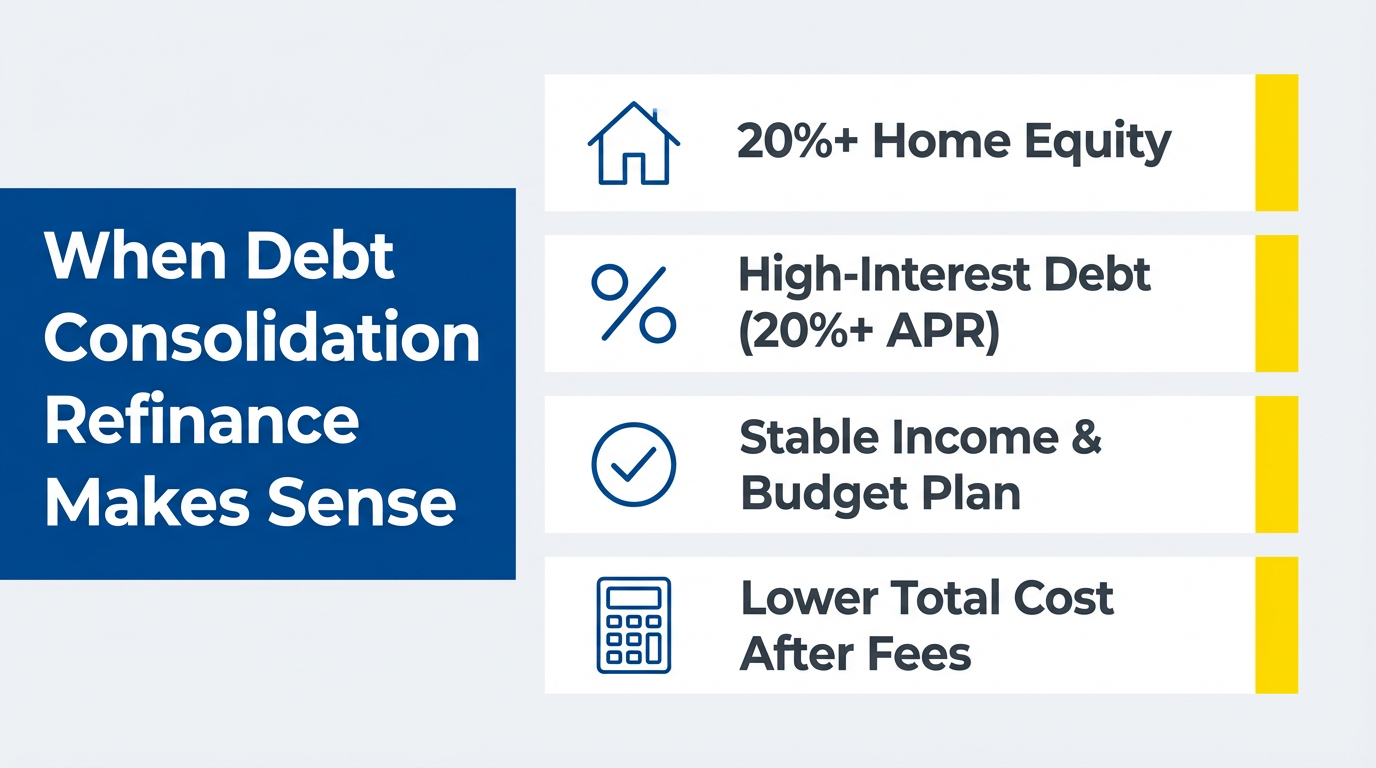
Based on my experience working with Michigan homeowners, a debt consolidation refinance tends to work well when:
You have significant equity in your home, typically at least 20% after the cash-out
Your credit card debt carries interest rates substantially higher than current mortgage rates
You have a stable income and can commit to a debt payoff plan
You have addressed the underlying spending patterns that created the debt
The total cost of the refinance, including closing costs and interest over time, is less than continuing to pay your current debts separately
When You Should Probably Wait
On the other hand, consider holding off if:
You have limited equity or your home value has declined
Your credit score has dropped, which could result in a higher mortgage rate
You are uncertain about your job stability or income
You have not created a budget or addressed spending habits
The closing costs would eat up most of your potential savings
Protecting Yourself from Predatory Offers
One more thing worth mentioning. When you start researching debt consolidation options, you will likely receive offers from various lenders, some legitimate and some not. Be cautious of any offer that seems too good to be true, pressures you to act immediately, or comes with excessive fees.
Work with a reputable mortgage professional who takes the time to understand your situation and presents options transparently. A good lender will help you understand all the costs involved and will never pressure you into a decision that does not serve your best interests.
Taking the Next Step
If you are a Michigan homeowner wondering whether now is the right time for a debt consolidation refinance, the answer depends entirely on your specific situation. The general interest rate environment suggests there is potential to save money, but the details matter.
The best way to know for certain is to have a professional review your current mortgage, your debts, your home equity, and your financial goals. From there, you can make an informed decision based on real numbers rather than guesswork.
If you would like to explore whether a debt consolidation refinance makes sense for your situation, I invite you to schedule a free refinance review with Michigan Mortgage Solutions. You can visit michiganmortgagesolutions.com/refinance-consultation or call (248) 963-1894 to get started. There is no pressure and no obligation. Just a straightforward conversation about your options and what might work best for your family.